
Infrastructure below ground
Tunnels: how a road goes under water
Ireland has a handful of notable tunnels, and each of them is different from the others. Here is how they work as structures, what happens inside them, and what you should know about them.
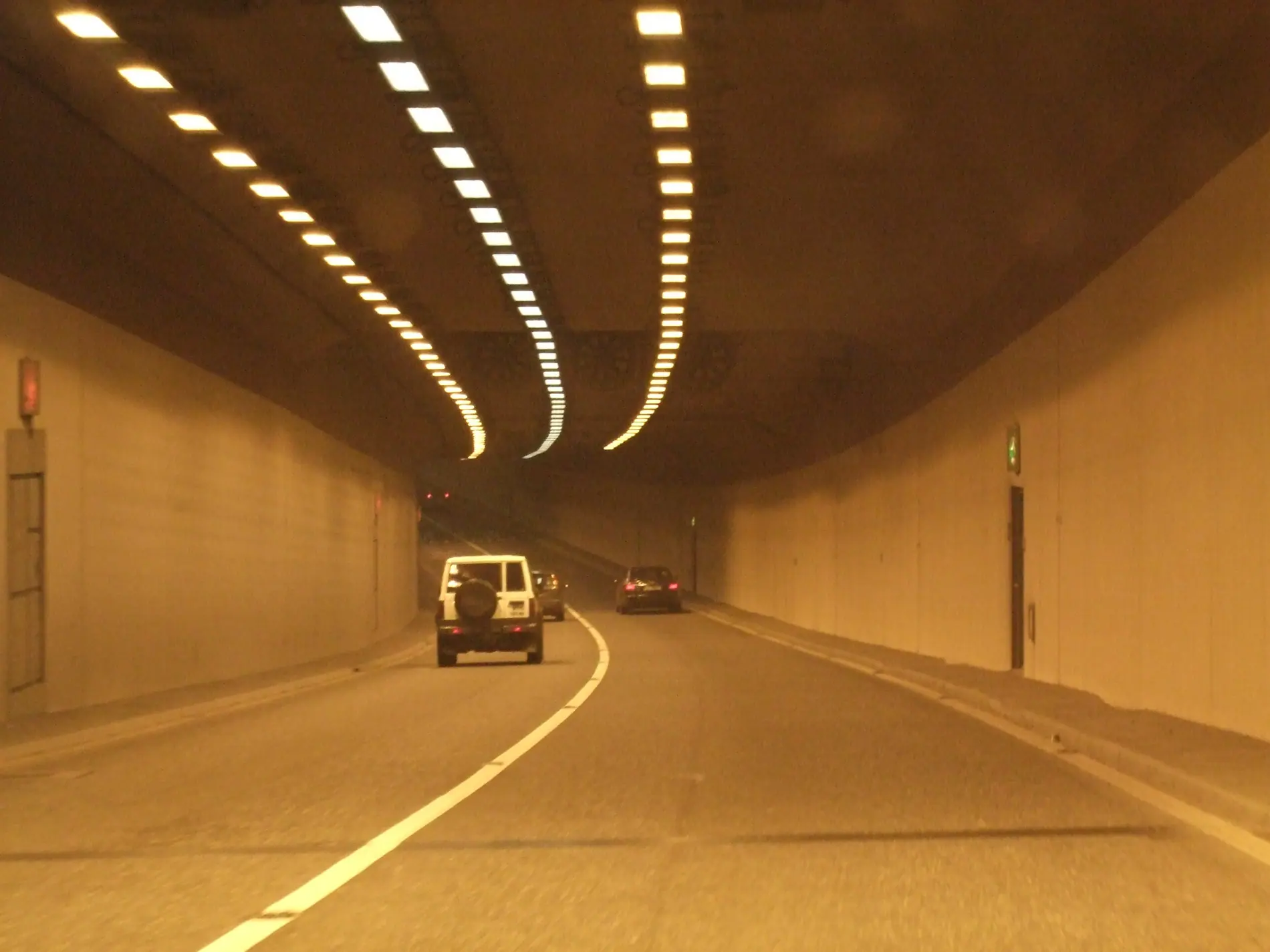
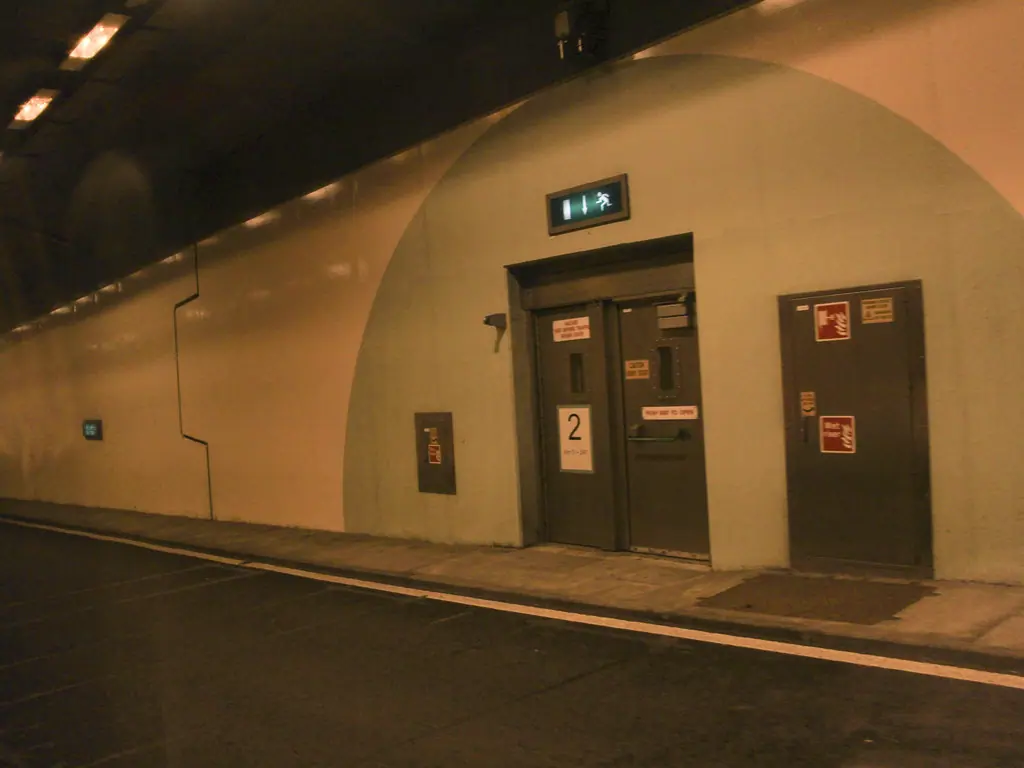
Inside the Jack Lynch Tunnel, Cork. Photograph: Seighean (public domain), via Wikimedia Commons.
A tunnel is a curious thing: a road that runs beneath something else and remains a road all the same. Usually the something else is water, a hill or a city. What is most interesting about a tunnel is that you cannot see it from outside — there is only a portal, and then darkness and lights.
A number of tunnels on Ireland's road network are well known. They differ in length, in depth, in the kind of traffic they carry and in the way they are maintained. These are the ones people meet most often.
Tunnel 01 — Cork
The Jack Lynch Tunnel
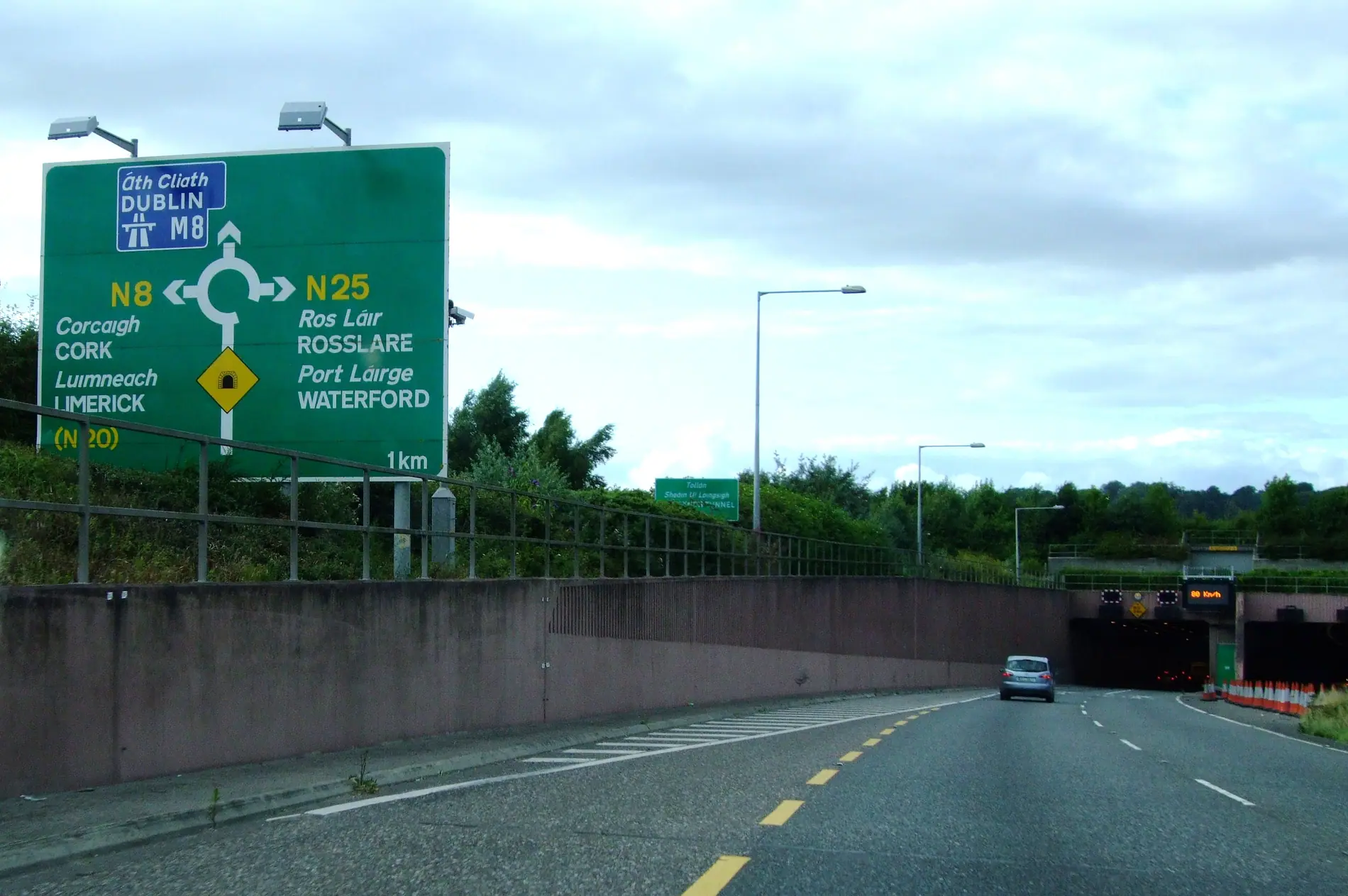
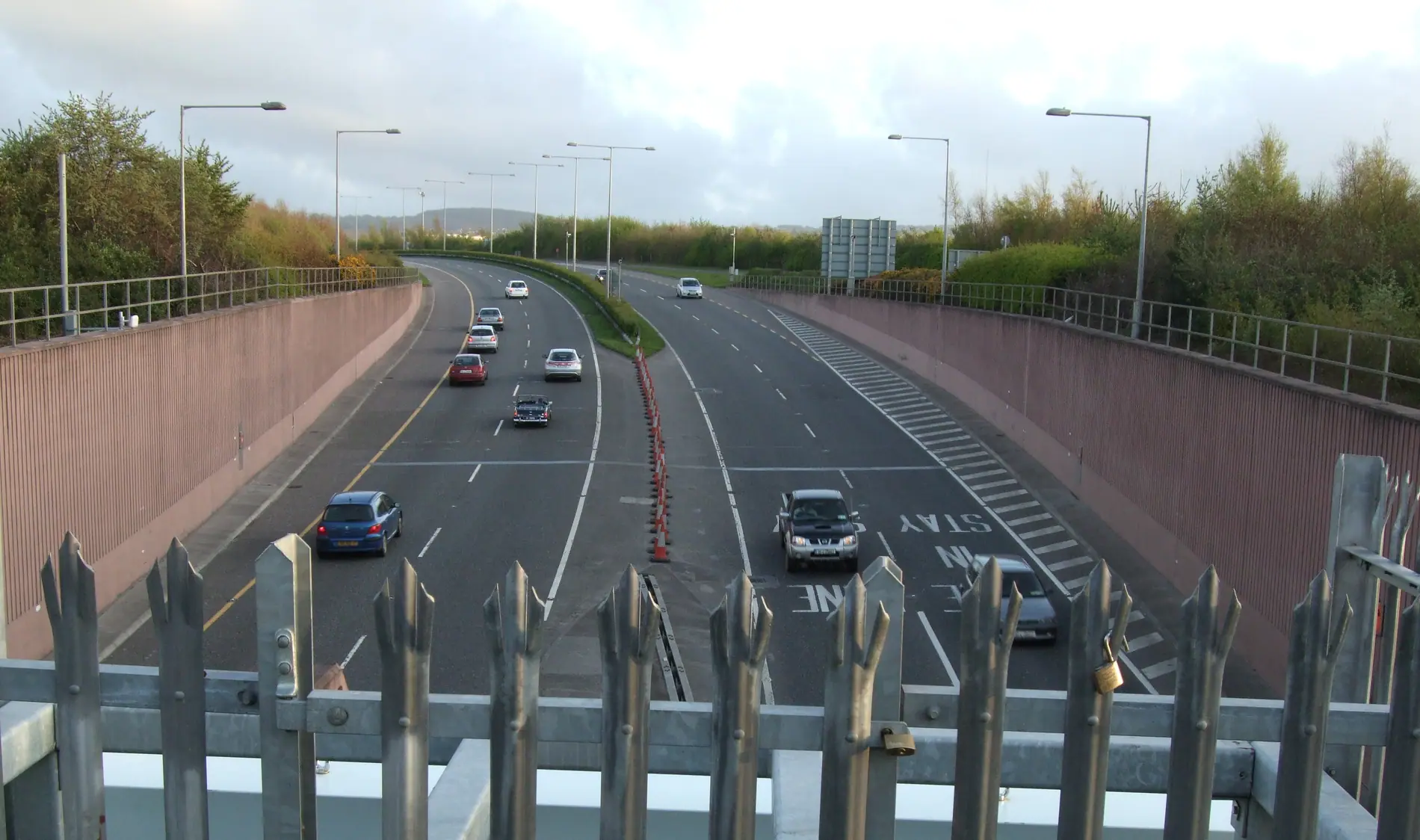
The Jack Lynch Tunnel is the best known in the south of Ireland. It passes beneath the River Lee on the edge of Cork and forms part of the N40 corridor. That corridor links the west of the city with the east, and it is the main way of keeping traffic out of the streets of the centre.
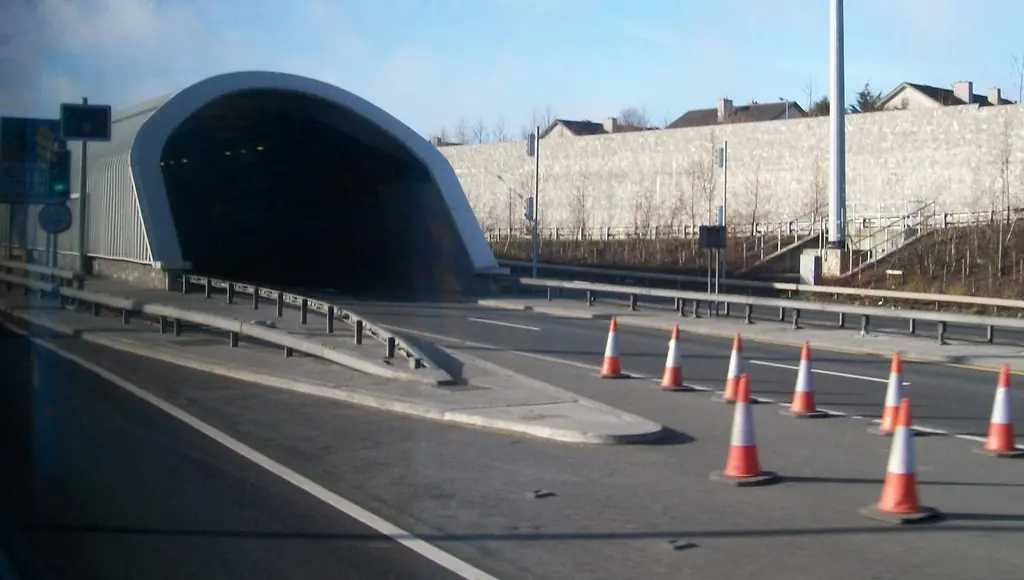
From a driver's point of view this tunnel is fairly straight and wide, though the approach to it differs on each side. The portals are clearly visible, and there is signage telling you what is coming.
Tunnel 02 — Dublin
The Dublin Tunnel
The Dublin Tunnel was built to take freight traffic off the city's streets and to create a direct link between the port and the motorway network. It opened in 2006, and at first it was restricted to goods vehicles before being opened to all traffic shortly afterwards.
For the driver, most of the tunnel takes the form of twin tubes underground, with the portals set in urban areas. That means the approaches are tighter than they would be in open country.
What happens inside
A tunnel is not simply a tube with lights in it. It has systems to keep the air clean, to control temperature, to manage water and to respond to incidents. Each one of these is necessary if the tunnel is to be used continuously.
-
01
Ventilation
The air is kept moving through ventilation systems, to refresh it and to clear smoke.
-
02
Lighting
The lights are designed to make the crossing easy, without glare, and to show up the curve of the road.
-
03
Traffic control
Systems are in place to regulate speed, to display warnings and to close the road if need be.
-
04
Maintenance
Maintenance work is carried out regularly, and plans exist for temporary closures.
A tunnel cannot be “open” or “closed” without consequence — think of the other route that would be available, and of the time it would take.
Tunnel 03 — the Shannon
The Limerick Tunnel
A tunnel crosses the Shannon on the edge of Limerick, and it forms part of the N18 on the route around the south of the city. It is fairly short in comparison with the urban ones, but it is important because of the river it crosses.
People often come upon it while travelling between Limerick and the west coast. The landscape is what matters here: the river is most of the story.
Tunnels can close
Every tunnel is subject to temporary closure for maintenance or safety reasons. We cannot predict when.
Length
A short tunnel, beneath a great river
Type
A tunnel beneath a great river
What you should know
This is not driving advice. It is an account of the things people encounter and have to think about.
Time saved
A tunnel can save time, but it is no guarantee. The result depends on the traffic.
Signs
Follow the signs inside the tunnel, especially those that change.
Closures
A tunnel can close suddenly. Be ready for another route.
Context
Not every tunnel is the same — look at the kind of road involved.
Frequently asked questions
How many tunnels are there in Ireland?
We have no exact figure that would be reliable at any given time. It is fair to say that there are a few notable ones which most accounts mention — the Jack Lynch Tunnel in Cork, the Dublin Tunnel and the Limerick Tunnel.
Is there a toll on every tunnel?
No. It depends on the tunnel and on the system in place. Consult the official site.
Can I walk through a tunnel?
No. Pedestrians are not permitted in road tunnels. There are other ways to walk.
What happens if there is a delay in the tunnel?
A delay can arise from traffic, from roadworks or from an incident. Follow the signs and the instructions that are available.
Editorial
Content is written and reviewed in accordance with our editorial policy.
Corrections
If you see an error, let us know at [email protected].
Contact
m50nline, 73 Clontarf Rd, Clontarf East, Dublin 3, D03 EP93, Ireland
+353 1 833 6364